
Outdoor Blinds Cost Guide: What Affects the Price?
How Much Do Outdoor Blinds Cost in Melbourne? What Actually Drives the Price
It’s usually the first question on every homeowner’s mind, and fair enough; before you commit to enclosing your patio, deck or alfresco area, you want a sense of what you’re actually signing up for. The trouble is that a straight dollar figure rarely tells the full story. Outdoor blinds Melbourne homeowners install can vary significantly in price from one property to the next, simply because so many individual factors come into play: the size of the opening, the material, whether you go manual or motorised, and even how exposed the area is to Melbourne’s weather.
Rather than throwing out a number that may not reflect your actual space, it’s far more useful to understand what genuinely moves the needle on cost. That way, when you do get a quote, you’ll know exactly why it looks the way it does.
Size and Number of Openings
This is the biggest cost driver by a wide margin. A single blind covering a small courtyard opening will always cost less than a full wraparound enclosure across a large alfresco area with multiple drops. Wider spans also need more robust tracking and support to handle wind loads, which adds to the overall investment. If budget is a key consideration, staging the project; enclosing the most exposed side first, then adding further drops later, is a practical way to manage cost without compromising on quality.
Manual vs Motorised Operation
Manual, crank-operated blinds are the more budget-friendly option and suit spaces where you’re happy to wind them up and down as needed. Motorised systems cost more upfront because you’re paying for the motor, wiring and often a remote or smart control system, but they add genuine convenience, particularly for wider blinds that are heavier to operate by hand, or for hospitality and commercial settings where blinds need to go up and down multiple times a day.
Some motorised outdoor blind systems can also be fitted with weather sensors that automatically retract the blind in strong wind or extend it in harsh sun, which adds a further layer of cost but can also protect your investment over time by preventing storm damage.
Track-Guided vs Straight-Drop Systems
Track-guided systems, like Ziptrak blinds, run within a channel on both sides of the blind. This eliminates gaps, stops the fabric flapping in the wind, and gives a cleaner, more tailored finish, but the tracking hardware itself adds to the cost compared to a basic straight-drop blind with no side guides. For most Melbourne homes dealing with genuinely changeable weather, the extra investment in a track-guided system tends to pay off through better wind performance and a longer lifespan.

Material Choice
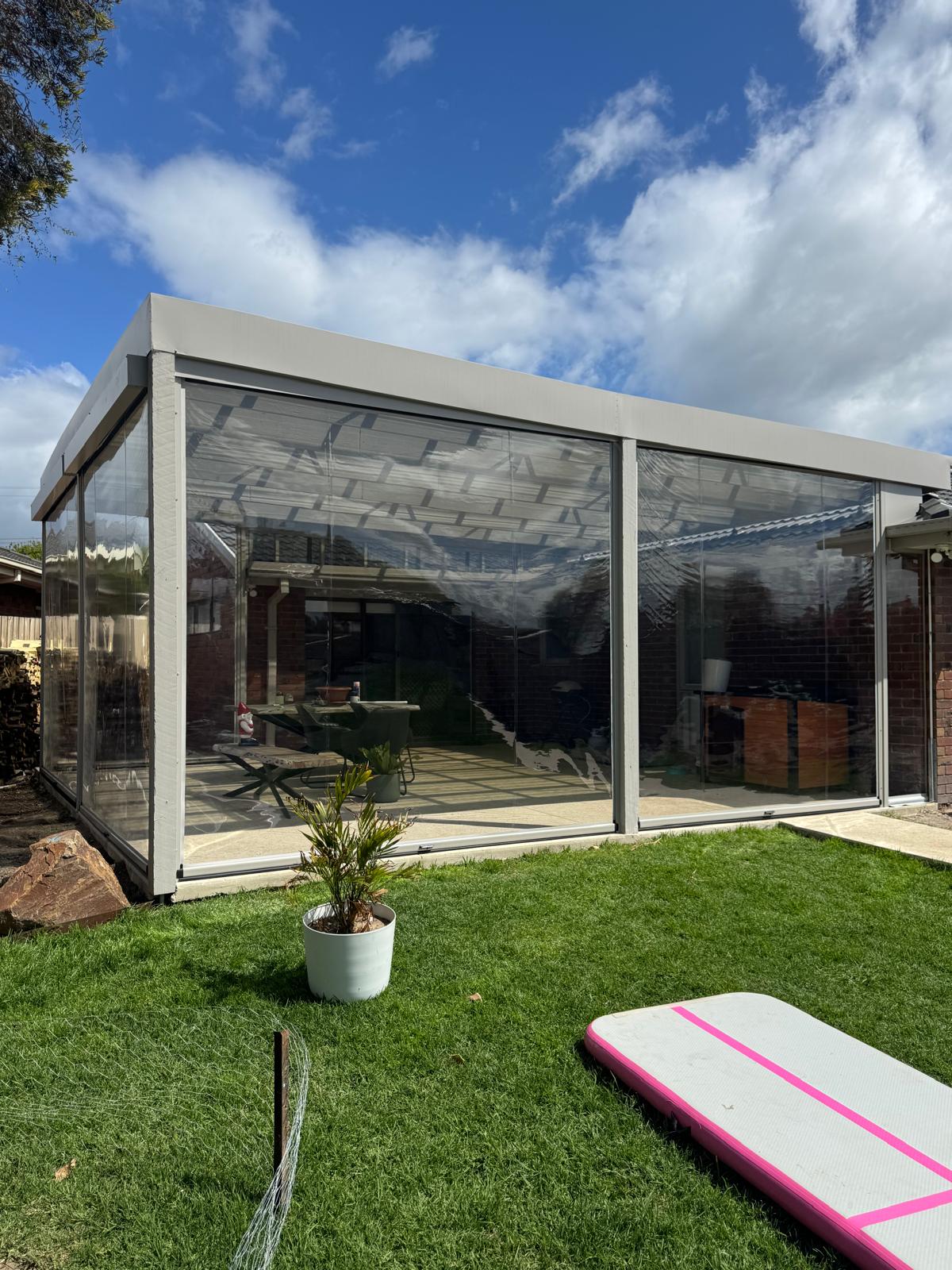
Outdoor blinds are typically available in clear PVC, mesh, or a combination of both (sometimes called a “combi” blind). Clear PVC offers full weather protection and an uninterrupted view but tends to need more regular cleaning and can be more susceptible to UV degradation over time without proper care. Mesh fabric is more breathable, blocks glare and UV effectively and generally holds up better to years of Melbourne sun, though it won’t fully stop wind-driven rain the way PVC will. Combi blinds combine a mesh section with a PVC panel, giving you visibility and airflow along with weather protection where you need it most, usually at a price point between the two single-material options.
Installation Complexity
Every property is different, and installation costs can shift depending on factors like ceiling height, whether there’s an existing pergola or structure to attach to, how many corners or awkward angles are involved, and whether any electrical work is needed for a motorised system. A straightforward single-span installation on an existing structure will typically be quicker and more cost-effective than a complex multi-sided enclosure built from scratch.
Getting an Accurate Number
Because so many variables affect the final price, the only way to get pricing that actually reflects your space is through an on-site or measure-based quote. Photos and rough dimensions can only tell part of the story; factors like wind exposure, existing structures, and access can all influence both the product recommendation and the final cost.
Before you request a quote, you can also get a feel for pricing and layout using our interactive Ziptrak® Design Your Blind tool, upload a photo or use a sample project, input your dimensions and preferences to see how your setup comes together before you commit to anything.
If you’re weighing up your options, the best next step is a free, no-obligation measure and quote. It’s the quickest way to move from a ballpark idea to a number you can actually plan around. Contact All Weather Blinds today on 1300 949 025.